[et_pb_section fb_built=”1″ _builder_version=”4.27.5″ _module_preset=”default” global_colors_info=”{}” theme_builder_area=”post_content”][et_pb_row _builder_version=”4.27.5″ _module_preset=”default” width=”100%” custom_padding=”0px||||false|false” global_colors_info=”{}” theme_builder_area=”post_content”][et_pb_column type=”4_4″ _builder_version=”4.27.5″ _module_preset=”default” global_colors_info=”{}” theme_builder_area=”post_content”][et_pb_text _builder_version=”4.27.5″ _module_preset=”default” custom_margin=”||0px||false|false” global_colors_info=”{}” theme_builder_area=”post_content”]
If you’re searching for the best fence for dogs, you’re probably hoping for a simple answer. Vinyl. Wood. Chain link. Done.
But here in Western Pennsylvania (with busy roads, wooded backyards, wildlife, and HOA rules) it’s not that simple. The real first step isn’t picking a material. It’s choosing a containment system that actually keeps your dog in and keeps trouble out.
The right fence depends on how your dog behaves, what your neighborhood allows, and how long you plan to stay in your home. In this guide, we’ll break down what works, what doesn’t, and how to choose a fence that actually keeps your dog safe.
Key Takeaways
- Physical fences are safer than invisible systems because they keep your dog in and block traffic, wildlife, and stray dogs from entering your yard.
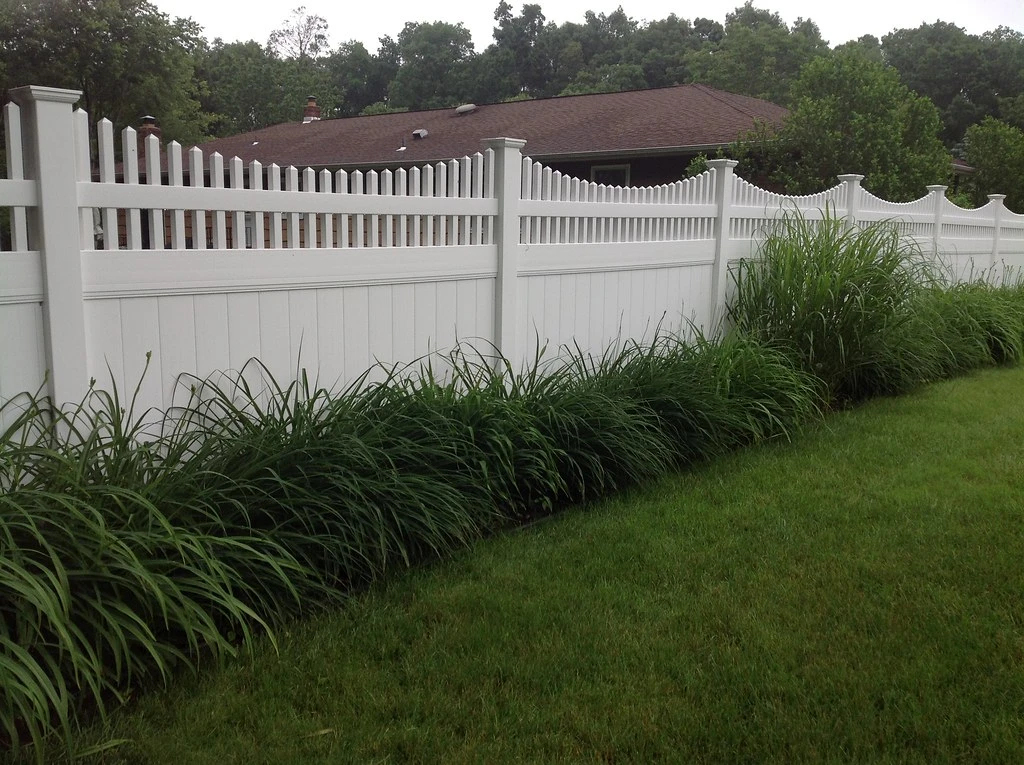
- Vinyl fencing is the best all-around fence for dogs. It works for jumpers, diggers, chewers, and reactive dogs with minimal maintenance.
- Fence height matters: 4 feet for small calm dogs, 5 feet for active breeds, and 6 feet for large or athletic dogs.
- Reactive dogs need privacy fencing like solid vinyl or wood to prevent fence-line barking and “fence fighting.”
- Installation is just as important as material. Ground-level installation, deep posts, tight picket spacing, and secure gate hardware prevent escapes.
- HOA rules in many Western Pennsylvania neighborhoods restrict chain link fencing, so always check local regulations first.
- Think long-term cost, not just upfront price. Wood requires ongoing staining and maintenance, while vinyl has little upkeep over 10 years.
Why Physical Fences Keep Your Dog Safer Than Invisible Systems
Invisible fences are heavily marketed around Western Pennsylvania, and plenty of families use them. While they may seem convenient and affordable upfront, invisible systems simply can’t provide the same level of protection as a traditional physical fence.
Physical fences protect your dog from traffic, wildlife, and other threats that invisible systems can’t handle.
Here’s how they differ:
Invisible fence:
- Keeps your dog in, but doesn’t stop other animals or people from entering your yard
- Relies on shock-based training, and veterinary experts warn about behavioral risks with these systems
- No visual boundary for neighbors, delivery drivers, or kids cutting through
Physical fence:
- Barrier works both ways and keeps threats out while your dog stays in
- Visible boundary everyone can see and respect
- Blocks visual triggers for reactive dogs (stops that constant fence-line barking)
Now, let’s look at which physical fence material matches your dog’s behavior.
Match Your Fence to Your Dog’s Behavior (Not Just Size)
If you have more than one dog, build your fence for the one most likely to test it; not the calm one.
Your easygoing senior might be fine with a 4-foot fence. But that new rescue who can clear a couch? They may need 6 feet, tighter spacing, and sturdy gate hardware.
The escape artist sets the standard. Build for them, and everyone stays safe.
[/et_pb_text][et_pb_code _builder_version=”4.27.5″ _module_preset=”default” custom_margin=”||1px||false|false” hover_enabled=”0″ global_colors_info=”{}” theme_builder_area=”post_content” sticky_enabled=”0″]
[/et_pb_code][et_pb_text _builder_version=”4.27.5″ _module_preset=”default” custom_margin=”||||false|false” global_colors_info=”{}” theme_builder_area=”post_content”]
If your dog tends to bark and lunge at people or animals passing by, a see-through fence like chain link or open aluminum can make the problem worse. That’s because your dog can see every movement outside the yard. The constant visual triggers often lead to what trainers call “fence fighting.”
A solid wood or vinyl privacy fence solves that by blocking the view and removing the temptation altogether.
From there, proper installation keeps the fence secure. Setting it flush to the ground helps prevent digging underneath. Narrow picket spacing stops small dogs from squeezing through gaps. And strong, self-closing gate latches make sure an eager nose can’t push the gate open.
Vinyl Fencing: The Low-Maintenance All-Rounder
Vinyl works well for most dog owners and handles multiple behaviors with almost no maintenance.
Why Vinyl Works:
- Smooth surface: Can’t chew it, hard to climb it
- Privacy panels: Blocks visual triggers for reactive dogs
- Weather-proof: No rot, rust, or splinters
- Minimal maintenance: Hose off twice a year
Extreme cold can make vinyl brittle if temperatures stay below 0°F for long stretches. If you’re in a harsh winter climate, ask about cold-rated vinyl first.
10-Year Cost:
- Upfront: $25 to $40 per linear foot installed
- Maintenance: Virtually zero (maybe $50/year for cleaning)
- Total 10-year cost: Installation plus around $500
Vinyl fencing includes privacy panels, picket styles, and multiple color choices.
Wood Fencing: Classic Privacy with Maintenance Trade-Offs
Wood gives you classic privacy but needs staining every 2 to 3 years at $300 to $500 per treatment.
What Wood Offers:
- Full privacy: Board-on-board and shadow box styles block visibility completely
- Classic aesthetic: Natural wood look many homeowners prefer
- Customizable: Adjust height, style, and design to fit your yard
The Maintenance Reality:
- Staining: Every 2 to 3 years at $300 to $500 per treatment
- Board replacement: Weather damage shows up every 5 to 10 years
- Lifespan: 10 to 15 years with proper care
- Chewing vulnerability: Some dogs love the taste of wood
10-Year Cost:
- Upfront: $20 to $30 per linear foot
- Maintenance: 4 staining treatments ($1,200 to $2,000) plus repairs ($500 to $1,000)
- Total 10-year cost: Installation plus $1,700 to $3,000
Skip it for: Busy lifestyles, chewer dogs, wet climates
[/et_pb_text][et_pb_image src=”https://jbrfences.com/wp-content/uploads/2025/10/JBR-Fences-2.webp” alt=”JBR Fences” title_text=”JBR-Fences (2)” _builder_version=”4.27.5″ _module_preset=”default” global_colors_info=”{}” theme_builder_area=”post_content”][/et_pb_image][et_pb_text _builder_version=”4.27.5″ _module_preset=”default” custom_margin=”||20px||false|false” locked=”off” global_colors_info=”{}” theme_builder_area=”post_content”]
Aluminum/Ornamental Fencing: Decorative Strength for Large Dogs
Best for large calm dogs, decorative yards, and almost no maintenance. Not recommended for small breeds unless you add puppy pickets.
Why Aluminum Works:
- Impossible to chew: Metal construction stands up to any dog
- Lasts 30 years or more: Rust-proof and weather-resistant
- Decorative appeal: Ornamental styles in 2-rail and 3-rail designs
- Strong enough: Handles powerful breeds like German Shepherds and Rottweilers
The Limitations:
- Picket spacing: Small dogs slip through unless you add puppy pickets
- No privacy: Dogs can see out and triggers reactive behavior
- Higher cost: $30 to $50 per linear foot installed
Skip it: Small dogs, reactive dogs, tight budgets
Chain Link Fences: Budget-Friendly for Large, Calm Dogs
Chain link works for specific situations: large yard, calm dog, tight budget. It comes in galvanized and vinyl-coated options.
Why Chain Link Works:
- Most affordable: $10 to $20 per linear foot installed
- Durable: Lasts 15 to 20 years
- See-through: Monitor your dog easily
The Trade-offs:
- Climbable: Links provide toe-holds for athletic dogs
- No privacy: Triggers reactive dogs who can see everything
- Fence fighting risk: See-through design makes reactive or territorial dogs worse through constant barking at passersby
- Not attractive: HOA may ban it in residential neighborhoods
- Can rust: Sharp edges develop over time
Works for: Rural properties, farm settings, large calm dogs
Skip it: Climbers, reactive dogs, HOA neighborhoods
Installation & Height: What Actually Keeps Dogs In
Material choice is 50% of the equation. Installation quality is the other 50%. Even the best fence fails if it’s installed incorrectly.
[/et_pb_text][et_pb_code _builder_version=”4.27.5″ _module_preset=”default” custom_margin=”||10px||false|false” hover_enabled=”0″ locked=”off” global_colors_info=”{}” theme_builder_area=”post_content” sticky_enabled=”0″]
[/et_pb_code][et_pb_text _builder_version=”4.27.5″ _module_preset=”default” custom_margin=”||20px||false|false” locked=”off” global_colors_info=”{}” theme_builder_area=”post_content”]
Critical Installation Elements:
- Ground-level installation: Fence sits flush to ground with no gaps where dogs can dig
- Buried barrier: 6 to 12 inches deep stops diggers from tunneling out
- Post depth: Deeper posts (30 to 36 inches) create a stronger foundation that won’t shift
- Picket spacing: Maximum 4 inches apart prevents small dogs from squeezing through
- Gate hardware: Self-closing hinges and double-latch systems stop escape artists from nudging gates open
Note: Don’t give jumpers a launch pad. Avoid lining the fence next to a deck, steps, or raised planter. Keep climbable items like wood piles, storage bins, and lawn furniture away from the fence line.
Making Your Decision: Material + Budget + Rules
Here’s how to choose the right fence for your dog in four steps.
Step 1: Check Rules First
Call your HOA or visit the township zoning office. Ask what fence materials, colors, and heights are allowed. Don’t waste money planning a fence you can’t legally build. Professional fence contractors handle permit drawings and paperwork for you, and know local requirements.
Step 2: Match Material to Dog Behavior
Start with how your dog behaves. Jumpers usually need a 6-foot vinyl or wood fence. Diggers need a fence installed tight to the ground. Chewers do best with vinyl or aluminum. And reactive dogs benefit from solid vinyl or wood that blocks their view.
If your dog checks more than one box, vinyl is often the safest all-around choice. And if you have multiple dogs, build for the escape artist; not the calm one.
Step 3: Budget Reality Check with 10-Year View
Plan for the next 10 years, not just your dog today. Size and design for future dogs now rather than rebuild later.
Step 4: Get Professional Installation
A fence is only as strong as the way it’s installed. Proper post depth, secure gate hardware, and barriers at ground level are what keep it standing and working the way it should.
Professional installation also comes with a warranty, so if something shifts or fails due to the install, you’re covered. Once it’s in place, a little basic boundary training helps your dog understand and respect the new limits.
The most common mistakes homeowners make are building too short, overlooking HOA rules, or choosing wood without planning for ongoing maintenance. And keep in mind, local pricing can vary depending on your yard size, layout, and ground conditions.
Common Questions About Dog Fences
1. What is the best type of fence to keep dogs in?
Chain link, aluminum, wood, and vinyl all keep dogs in effectively. Your choice depends on your dog’s behavior and budget. Vinyl handles most situations well.
2. Is a wood or vinyl fence better for dogs?
Vinyl avoids splinters, rot, and rust problems that affect wood and many metal fences. This makes vinyl safer and easier to maintain for dog owners long-term.
3. What height should a dog fence be?
Small dogs need 4 feet, medium dogs need 5 feet, and large or athletic dogs need 6 feet minimum. Build higher for known jumpers.
Ready to Build the Right Fence for Your Dog? Plan for the Long Term
Think beyond today. Choose a fence that fits your lifestyle, your budget, and the level of maintenance you are realistically willing to handle. If you may add another dog in the future, plan for that now instead of rebuilding later.
Walk your yard and picture how the fence will sit on the property. Then talk with a local fence professional who understands Western Pennsylvania soil, weather, and township rules.
At JBR Fences, we’ve installed hundreds of fences for Western Pennsylvania families, including dogs of all sizes and behaviors. If you want honest recommendations based on your dog’s specific habits, get your free estimate today. Planning it right the first time keeps your dog safe from day one.
The best fence for your dog isn’t just about material. It’s matching behavior to design, following local rules, and getting professional installation.
[/et_pb_text][et_pb_code _builder_version=”4.27.5″ _module_preset=”default” global_colors_info=”{}” theme_builder_area=”post_content”][/et_pb_code][/et_pb_column][/et_pb_row][/et_pb_section]



Comments are closed